Moving Issue Triage into CI: Running a Flue Workflow from GitHub Actions
A verification log of dry-running a GitHub Issue triage workflow built with Flue 1.0 Beta from GitHub Actions' issues.opened, instead of a persistent webhook server.
This article is part of " Flue Practical Guide " series (Part 4) — 7 posts
In the previous post, I built a workflow with Flue 1.0 Beta that takes a GitHub Issue title and body, then returns structured severity, reproducibility, label suggestions, and a summary.
Flue 1.0 BetaでGitHub Issueトリアージエージェントを動かしてみた https://llm-lab.dev/posts/flue-1-0-beta-issue-triage-agent/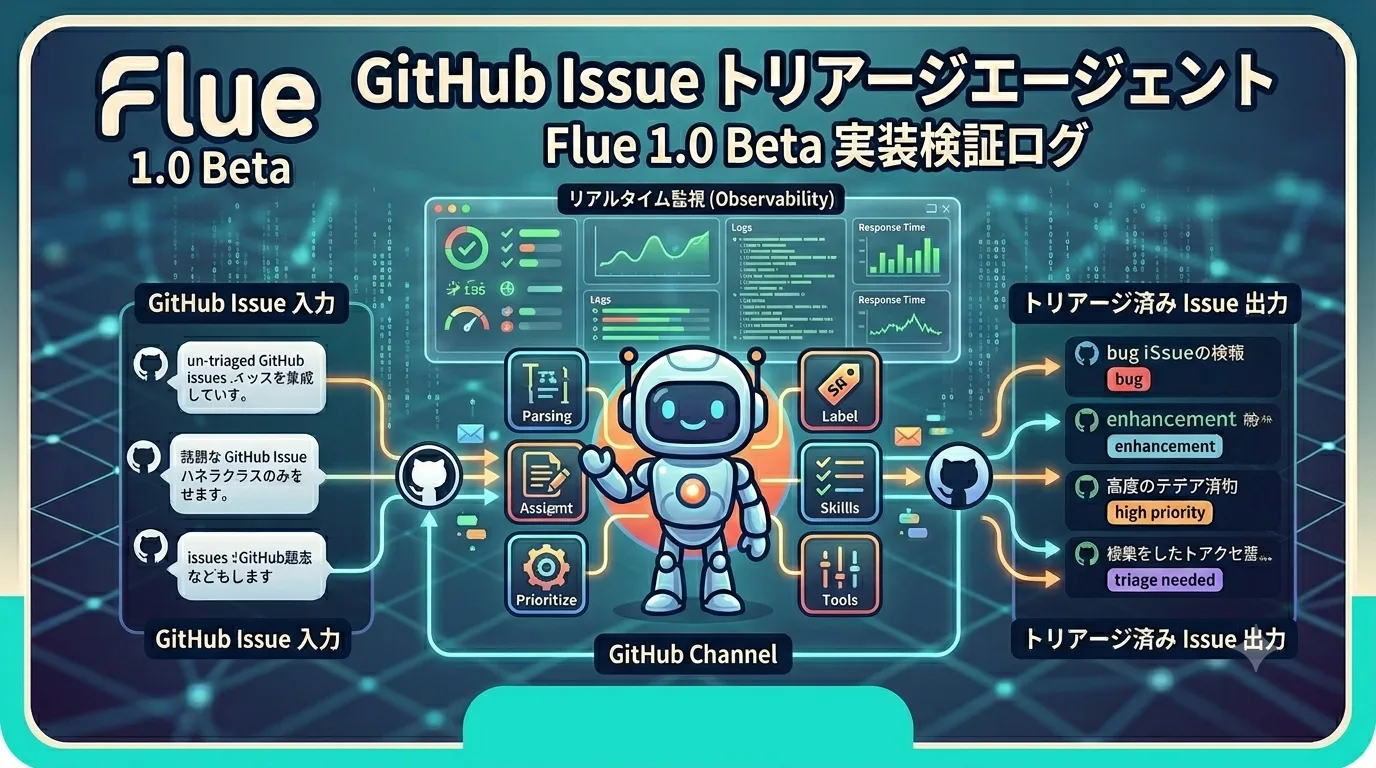
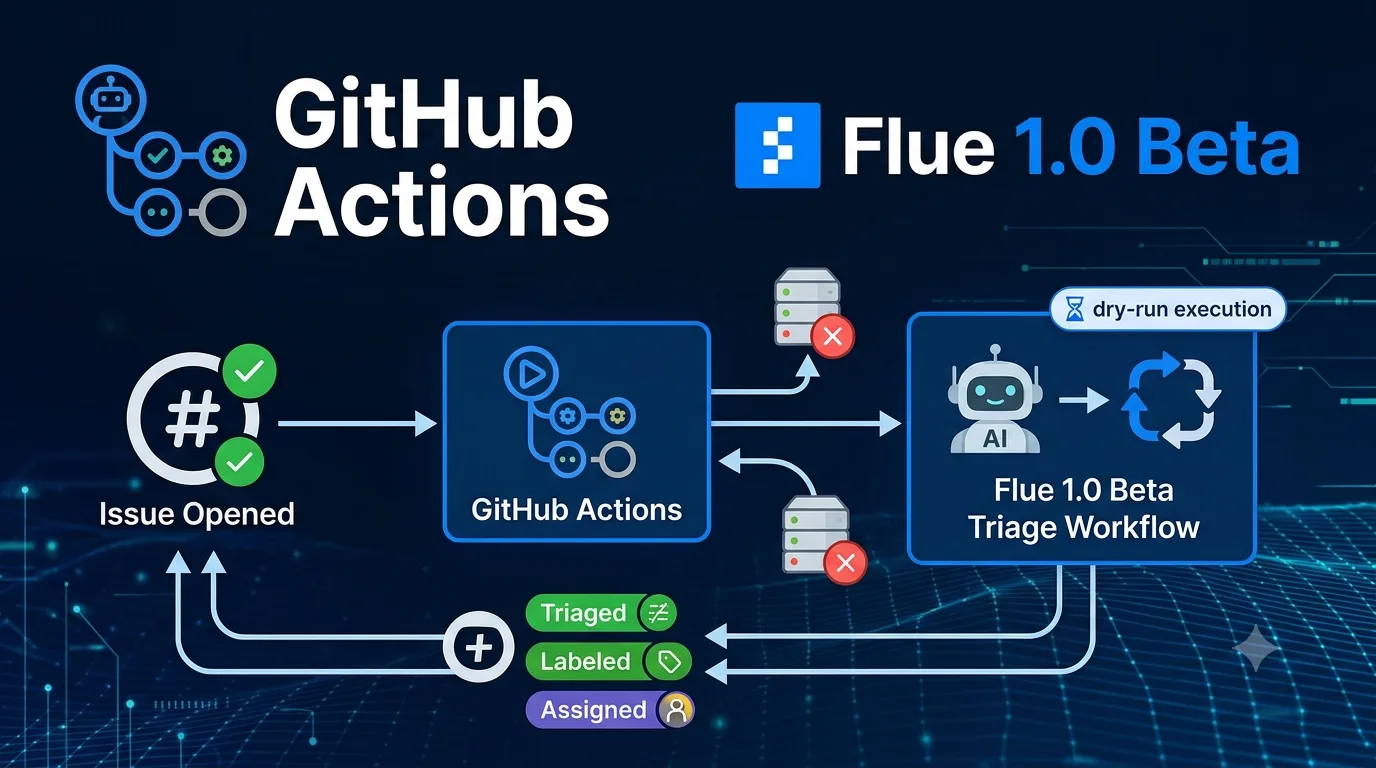
Last time, I confirmed that I could read a real issue via the GitHub CLI and pass it to flue run triage-issue. This post continues from there: I set up the same Flue workflow to run as a dry-run on CI, triggered by GitHub Actions’ issues.opened.
I haven’t wired it up to post comments or apply labels yet. For now it only prints the classification results to the Actions log. The reason is that I don’t want to hand broad GitHub permissions to an agent that reads untrusted issue bodies from the start.
In this experiment, I reused the triage workflow from the previous post as-is and only added an entrypoint for calling it from GitHub Actions. If you’re trying to reproduce this, it’s easier to verify that the workflow works locally first, then layer on the CI-specific changes.
Why move it to GitHub Actions
There are several ways to run an agent from a GitHub Issue.
- Build a persistent server that receives webhooks
- Build a GitHub App
- Catch
issues.openedwith GitHub Actions - Read the issue manually with the GitHub CLI and run it locally
If you’re only thinking about production, a GitHub App or webhook server can be the natural choice. But at this stage I only wanted to confirm that the issue body could be passed to the workflow and classified. So I avoided building an externally exposed server and moved the execution to GitHub Actions’ disposable runners instead.
Issue bodies are text that anyone can write. They may contain prompt-injection-like text, overly long logs, internal URLs, or information close to personal data. Giving an agent that reads this input immediate permissions to post comments or update labels would make the blast radius too wide for an experimental stage.
For now, the workflow only outputs structured results to the Actions log.
Creating the Actions entrypoint
In the previous CLI integration, I read the issue with gh issue view, built a payload, and passed it to flue run. In GitHub Actions, the event payload is placed as a JSON file at GITHUB_EVENT_PATH. So I added a script that reads the issue information from the Actions event and feeds it to the same triage-issue workflow.
import { readFileSync } from 'node:fs';
import { spawnSync } from 'node:child_process';

function readGitHubEvent() {
	const eventPath = process.env.GITHUB_EVENT_PATH;
	if (!eventPath) {
		return undefined;
	}

	return JSON.parse(readFileSync(eventPath, 'utf8'));
}

const event = readGitHubEvent();
const issue = event?.issue;

const title = issue?.title ?? process.env.ISSUE_TITLE;
const body = issue?.body ?? process.env.ISSUE_BODY ?? '';
const number = issue?.number ?? Number(process.env.ISSUE_NUMBER ?? 0);
const url = issue?.html_url ?? process.env.ISSUE_URL;
const repo = process.env.GITHUB_REPOSITORY ?? process.env.ISSUE_REPOSITORY;

if (!title) {
	console.error('Missing issue title. Provide GITHUB_EVENT_PATH or ISSUE_TITLE.');
	process.exit(1);
}

const payload = JSON.stringify({
	title,
	body,
	source: {
		repo,
		number,
		url,
	},
});

const result = spawnSync(
	'npx',
	['flue', 'run', 'triage-issue', '--target', 'node', '--payload', payload],
	{ stdio: 'inherit' },
);

process.exit(result.status ?? 1);
When GITHUB_EVENT_PATH is present, it reads the Actions event payload. When testing locally, you can pass ISSUE_TITLE and ISSUE_BODY as environment variables. This lets you verify the CI entrypoint with the same script on your local machine.
I added the following script to package.json:
{
  "scripts": {
    "triage:event": "node scripts/triage-github-event.mjs"
  }
}
Writing the workflow
The GitHub Actions side is simple: it starts on issues.opened, installs dependencies, and runs npm run triage:event.
name: Triage issue with Flue

on:
  issues:
    types: [opened]
  workflow_dispatch:
    inputs:
      issue_title:
        description: Issue title for manual dry-run
        required: true
        type: string
      issue_body:
        description: Issue body for manual dry-run
        required: false
        type: string

permissions:
  contents: read
  issues: read

jobs:
  triage:
    runs-on: ubuntu-latest
    steps:
      - uses: actions/checkout@v4

      - uses: actions/setup-node@v4
        with:
          node-version: 22
          cache: npm

      - run: npm ci

      - name: Run Flue issue triage
        env:
          OPENAI_COMPAT_API_KEY: ${{ secrets.OPENAI_COMPAT_API_KEY }}
          OPENAI_COMPAT_BASE_URL: ${{ secrets.OPENAI_COMPAT_BASE_URL }}
          FLUE_MODEL: ${{ vars.FLUE_MODEL || 'openai/preview/Kimi-K2.6' }}
          ISSUE_TITLE: ${{ inputs.issue_title }}
          ISSUE_BODY: ${{ inputs.issue_body }}
        run: npm run triage:event
Adding workflow_dispatch lets you dry-run manually without creating an issue. When triggered by issues.opened, the issue is read from GITHUB_EVENT_PATH. For manual runs, inputs.issue_title and inputs.issue_body are passed as environment variables.
The only permissions needed here are contents: read and issues: read. Since it doesn’t write comments or labels back yet, I haven’t added issues: write.
Making GitHub Actions recognize it
I hit a snag here. Pushing .github/workflows/triage-issue.yml to a feature branch alone didn’t make the workflow appear in the GitHub Actions tab.
workflow_dispatch for manual execution generally requires the workflow file to exist on the default branch. When you create a workflow on a feature branch like I did, you first need to open a Pull Request and merge it into the default branch.
Before the merge, the Actions tab showed an initial screen like this:
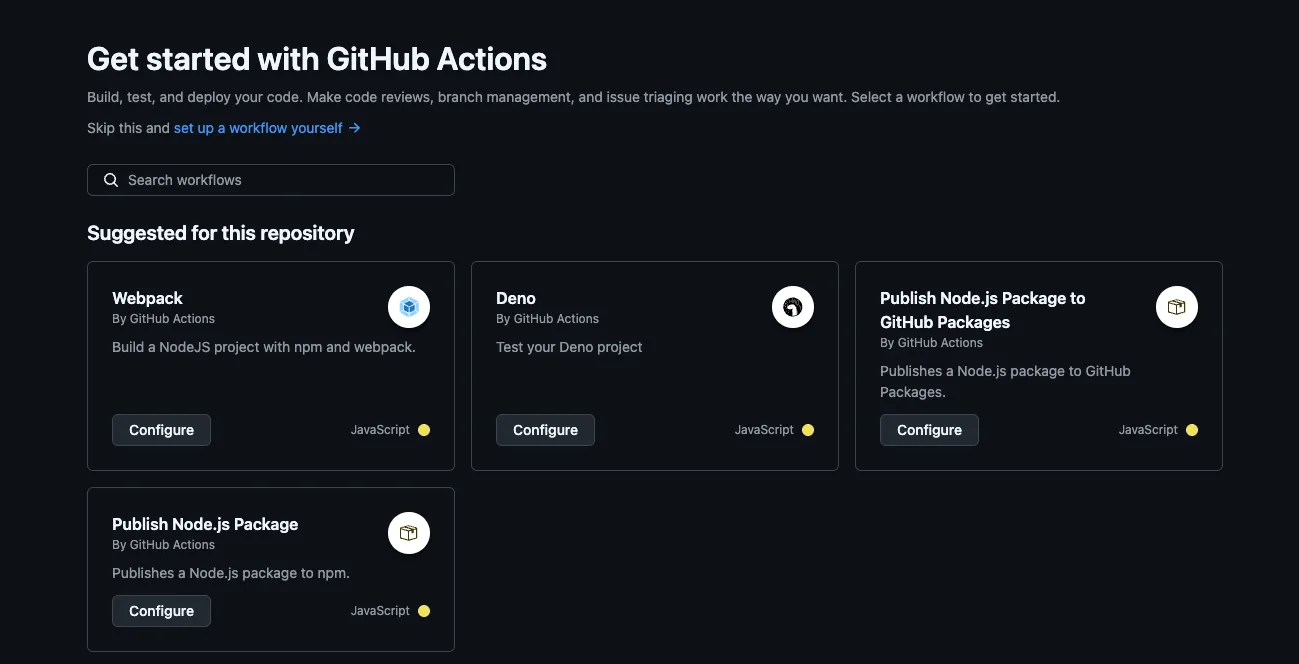
Get started with GitHub Actions
Build, test, and deploy your code. Make code reviews, branch management, and issue triaging work the way you want. Select a workflow to get started.
After merging the PR, the display changed to this:
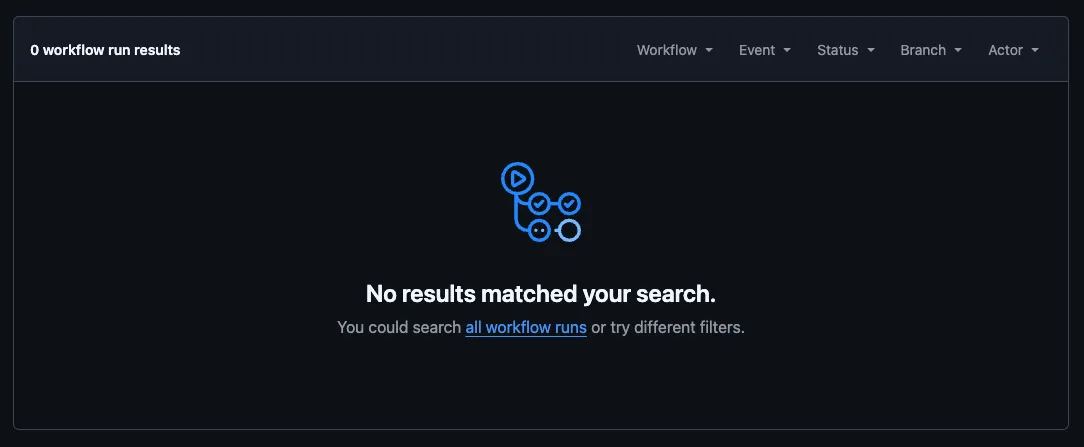
There are no workflow runs yet.The workflow is recognized but hasn’t run yet. If you see Triage issue with Flue on the left, you can select it and run it manually via Run workflow.
For the manual run, I entered the following values:
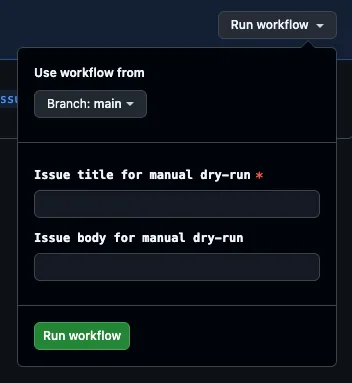
issue_title:
Dashboard is blank after login

issue_body:
Steps: log in, open /dashboard. Expected widgets. Actual blank white screen in Chrome 126.
Before running, I set OPENAI_COMPAT_API_KEY and OPENAI_COMPAT_BASE_URL as repository secrets. FLUE_MODEL can be set as a repository variable; if not set, the workflow defaults to openai/preview/Kimi-K2.6.
Running the same entrypoint locally
Before pushing to Actions, I ran triage:event locally.
ISSUE_TITLE="Dashboard is blank after login" \
ISSUE_BODY="Steps: log in, open /dashboard. Expected widgets. Actual blank white screen in Chrome 126." \
npm run triage:event
When written directly before the command like above, ISSUE_TITLE and ISSUE_BODY are passed as environment variables for that command. If you set them on separate lines beforehand, you need export to make them environment variables passed to child processes, not just shell variables.
export ISSUE_TITLE="Dashboard is blank after login"
export ISSUE_BODY="Steps: log in, open /dashboard. Expected widgets. Actual blank white screen in Chrome 126."
npm run triage:event
I first ran this in a network-restricted environment, so the workflow failed to connect to the model API after starting.
Error: Workflow failed: [internal_error] prompt failed: Connection error.
prompt failed: Connection error.
This wasn’t specific to the triage:event script I added. Running the existing npm run triage in the same environment produced the same connection error. In other words, it wasn’t a payload generation or script problem; it was a model API connectivity issue.
After allowing network access and rerunning, triage:event launched flue run, which completed from skill activation through finish.
 ▗  flue run
 ▚  workflow triage-issue
 ▘  starting...
    run       run_...

tool activate_skill
tool done activate_skill  (547 chars)

tool finish
tool done finish
{
  "severity": "high",
  "reproducible": true,
  "labels": [
    "bug",
    "dashboard",
    "frontend"
  ],
  "summary": "ログイン後に `/dashboard` を開くと、Chrome 126 で期待されるウィジェットが表示されず、空白の白画面が表示される問題です。再現手順が明確に示されており、主要機能であるダッシュボードが利用不可となっています。"
}
done workflow completed
This confirmed that the Actions entrypoint could pass a payload to the existing triage-issue workflow.
Running it on Actions
Finally, I ran it manually on GitHub Actions with the same input. The logs showed npm run triage:event launching flue run, proceeding from activate_skill through finish.
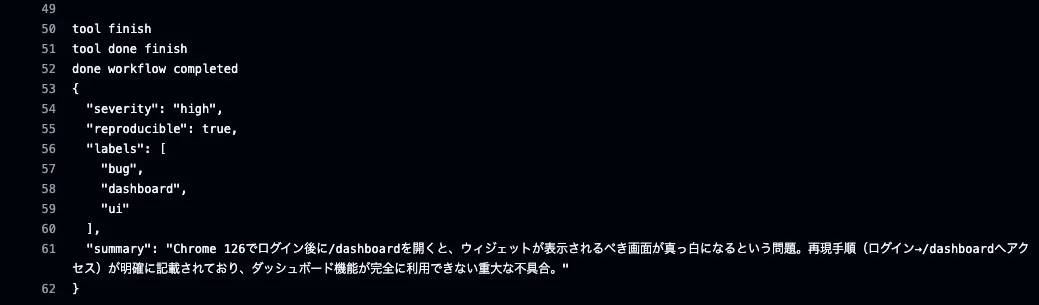
Run npm run triage:event

> flue@1.0.0 triage:event
> node scripts/triage-github-event.mjs

 ▗  flue run
 ▚  workflow triage-issue
 ▘  starting...
    run       run_...

tool activate_skill
tool done activate_skill  (547 chars)

tool finish
tool done finish
done workflow completed
{
  "severity": "high",
  "reproducible": true,
  "labels": [
    "bug",
    "dashboard",
    "ui"
  ],
  "summary": "Chrome 126でログイン後に/dashboardを開くと、ウィジェットが表示されるべき画面が真っ白になるという問題。再現手順(ログイン→/dashboardへアクセス)が明確に記載されており、ダッシュボード機能が完全に利用できない重大な不具合。"
}
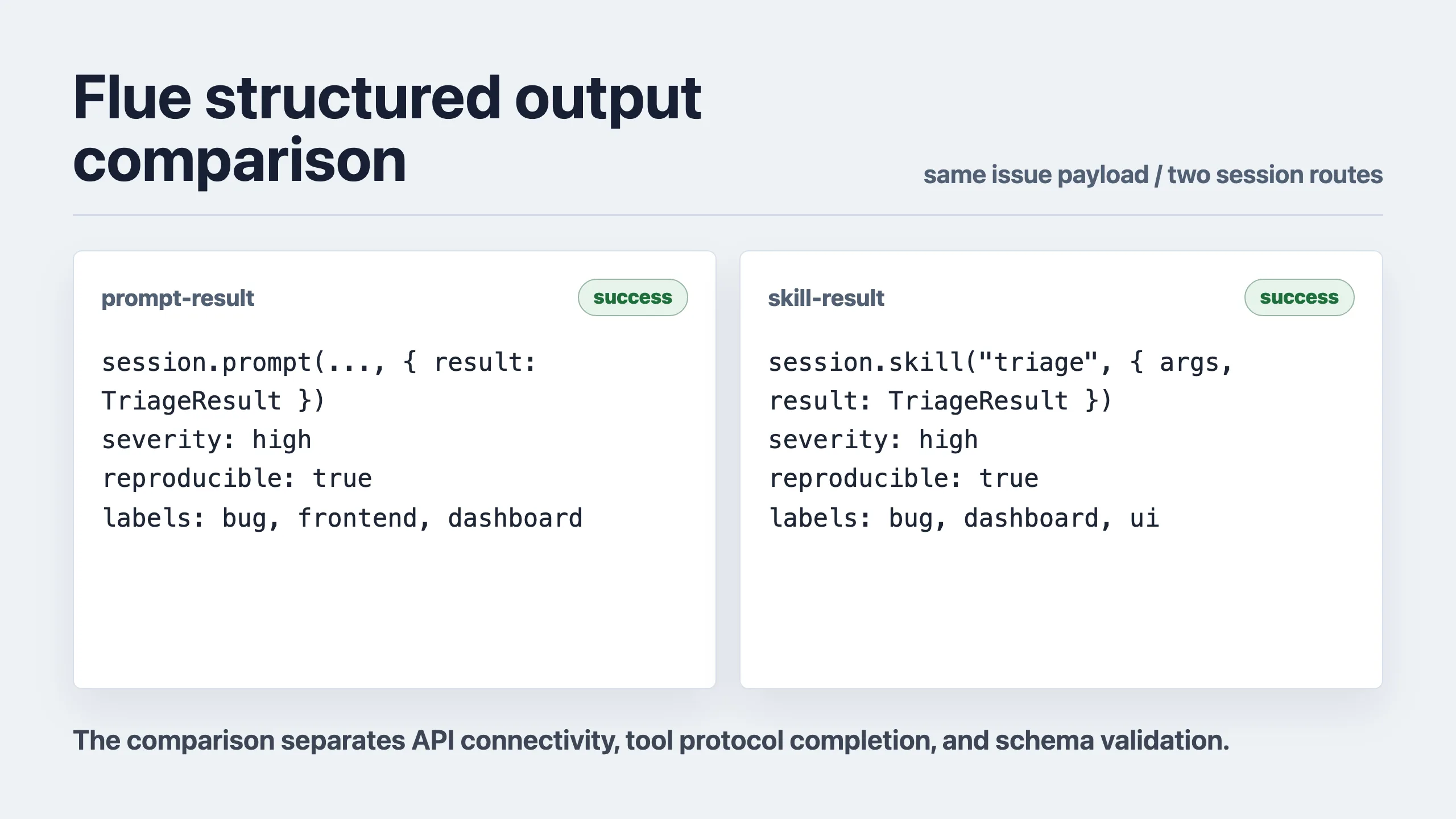
The label suggestions differed slightly from the local run, but since it returned structured results containing severity, reproducible, labels, and summary, I could confirm that calling the Flue workflow from Actions works.
At this point, the next thing you want to do is post a comment back to the issue. But I still want to keep that separate.
Writing comments to issues requires issues: write permission. Beyond that, operational questions arise: avoiding duplicate comments, preventing the same comment from being added on re-runs, checking for existing labels, and not creating labels arbitrarily.
A dry-run that only outputs classification results and a process that causes side effects on GitHub are separate stages. This Actions integration was only about verifying that the Flue workflow could be called from an issue creation event without a persistent server.
Summary
As a first step for running a Flue agent from a GitHub Issue, GitHub Actions proved to be a very approachable entrypoint. Without setting up a webhook server, you can use the issues.opened payload as-is and pass it to flue run triage-issue.
On the other hand, just because it runs on Actions doesn’t mean you should rush to write back to GitHub. When reading untrusted issue bodies, it’s better to first run a dry-run that outputs structured results to the log, verifying model API connectivity, skill execution, reaching finish, and output schema stability.
Flue workflows are easy to place in CI as one-off processes. Being able to narrow down the input and output boundaries on CI before building a persistent agent is quite helpful for external-input handling like issue triage.
The next question is how to trace workflows that ran on CI or locally later. I covered verifying how to send run_..., model names, success/failure, and structured output to Langfuse in another post.